

Breastmilk Sterilisation Guide
If you're using our breast pump and its parts and pieces (excluding the motor), it's important to wash all equipment in warm, soapy water after each use and sterilise every 24 hours to maintain hygiene and safety.
For additional guidance, The Royal Children’s Hospital is a helpful resource for sterilisation tips.
Please follow your country’s safety standards and procedures when it comes to sterilising breast pumps and their components.
General Cleaning Steps
- Wash your hands thoroughly before handling any pump parts.
- Disassemble all parts (excluding the motor) before cleaning.
- Rinse all components with cold water before washing.
- Clean using warm water, dishwashing liquid, and a clean brush.
- Rinse again with hot water (take care to avoid burns).
- Place parts upside down on a clean cloth to air dry.
- Store dried parts in a clean, covered container until next use.
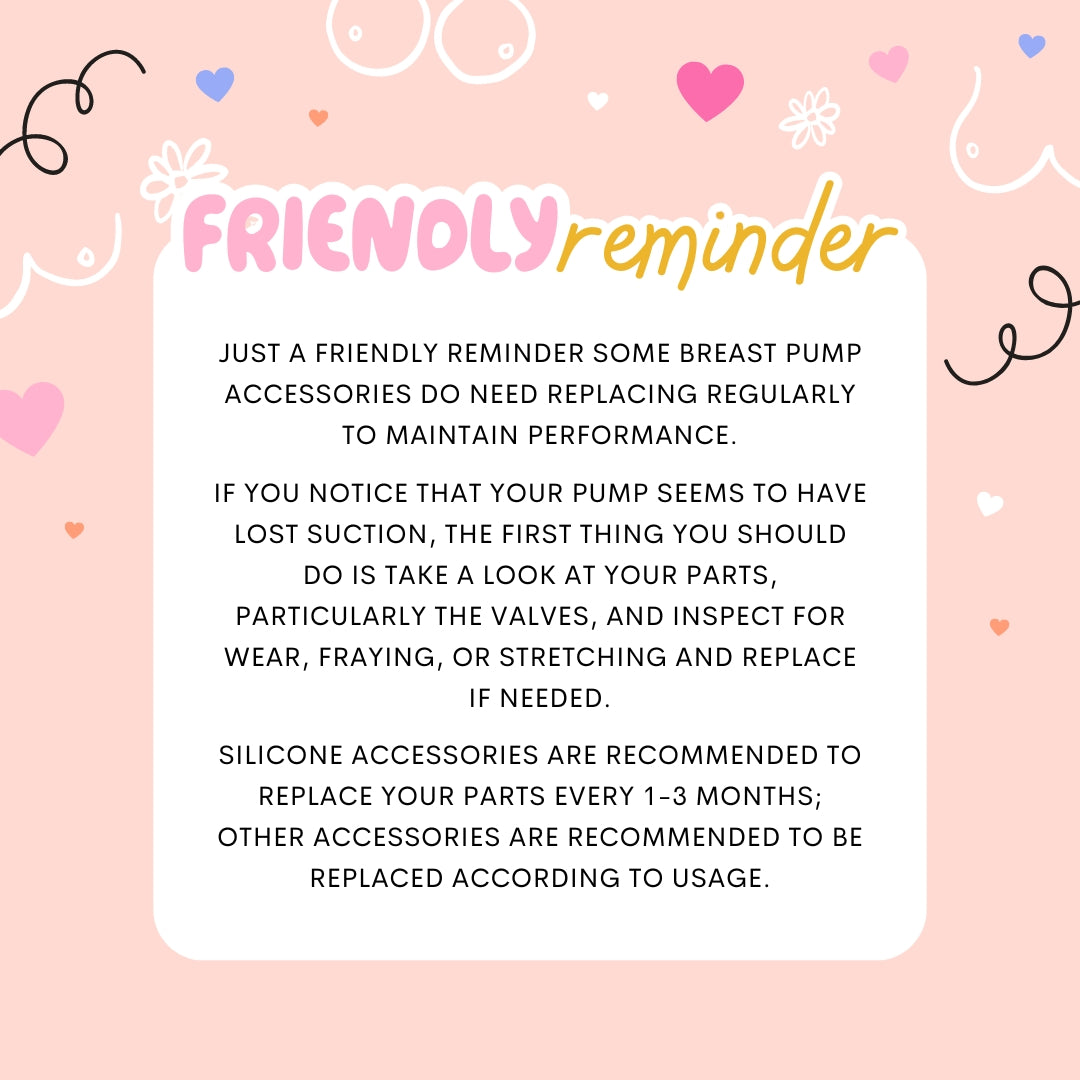
- We recommend replacing parts every 4-8 weeks depending on use.
Sterilising Methods
To maintain hygiene and extend the life of your pump, sterilise all parts (excluding the motor) using the following method:
Boiling Water Method:
Submerge all disassembled parts in a pot of boiling water for 3–5 minutes. This method is effective for sterilisation while being gentle enough to prevent damage when done correctly.
Important Note:
While some parents use electric or microwave sterilising machines, it’s important to understand that these can reach temperatures above 100°C. Repeated exposure to such heat can cause silicone parts such as valves, flanges, and diaphragms will warp, shrink, or expand. This may compromise both the function and fit of your pump parts.
For this reason, we recommend using the boiling method to prevent warping and ensure the longevity and performance of your equipment.
What Not to Do
- Do not sterilise the motor.
- Do not place any pump parts or accessories in a microwave.
- Avoid high heat sterilisation methods that may damage silicone components.